
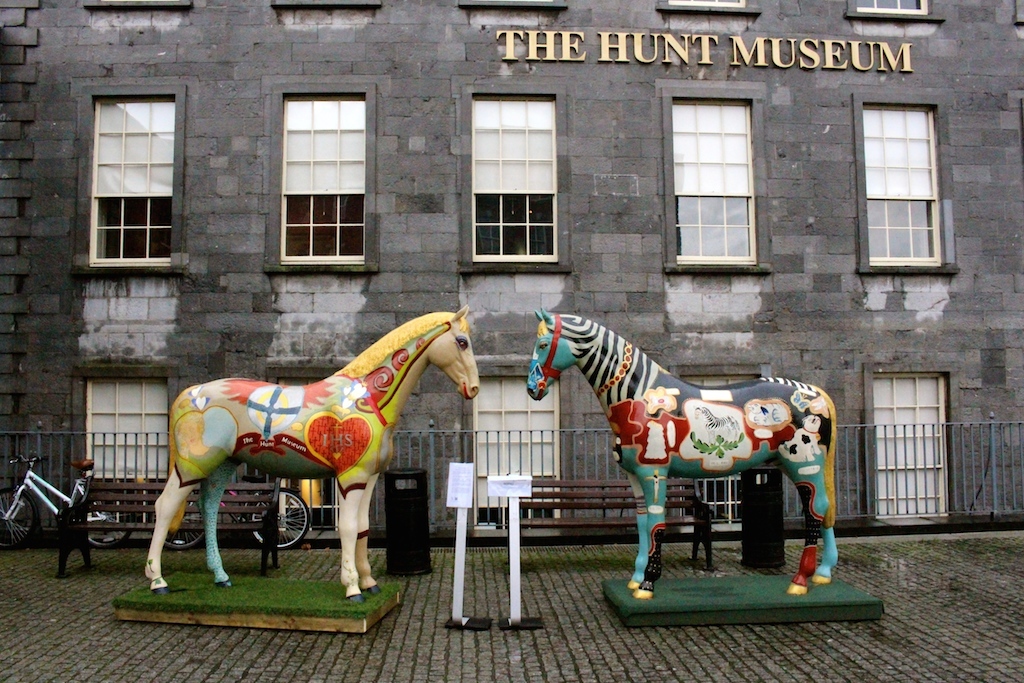
The Hunt Museum: A Museum Of Art And Antiquities In Ireland
The Hunt Museum is a museum in Ireland that is located in the city of Limerick. The museum is named after its founder, John Hunt. The museum houses a collection of art and antiquities that were collected by Hunt during his lifetime. The collection includes paintings, sculptures, furniture, and other objects from Ancient Egypt, Greece, Rome, and other cultures. The museum is open to the public and offers a variety of educational programs.
The Hunt Museum houses a collection of personal items donated by the Hunt family. The Georgian Custom House is where the building is now located, after it was originally housed in the University of Limerick. Among the museum’s collection are works by Pablo Picasso, Jack B Yeats, and Sybil Connolly. Custom House, formerly the Revenue Commissioners’ (including Customs and Excise) administrative center in Limerick, is now part of the city’s civic center. The structure was designed by Italian architect Davis Ducart in 1765. It was made up of Palladian-style columns and is designed by Ducart. The Hunt Museum houses approximately 2,500 artifacts from around the world, both Irish and foreign. Antrim Cross (an early 9th-century cast bronze and enamel cross), Dresses by Irish designer Sybil Connolly, Picasso drawings, and bronze horses once thought to have been designed by Leonardo da Vinci are among the works in the collection. It is also possible to see some of the Hunt collection at the Craggaunowen.
Which Irish City Would You Visit The Hunt Museum?

There are many reasons to visit the Hunt Museum in Ireland. The museum is home to a large collection of art and artifacts, as well as a variety of exhibits on Irish history and culture. Visitors can also enjoy a meal in the on-site restaurant or take a stroll through the beautiful gardens.
Hunt Museum History
The Hunt Museum is a museum in Limerick, Ireland. It was founded in 1952 by John and Gertrude Hunt. The museum houses a collection of art and antiquities. The collection includes works by René Magritte, Pablo Picasso, and Jack B. Yeats.
The Hunt Museum is regarded as one of Ireland’s leading museums and one of the world’s leading private collections of art and antiquities. The Hunt Collection, housed in the Palladian splendor of Limerick Custom House on the banks of the River Shannon, is an internationally recognized collection. Items are loaned out on a regular basis to British and V&A Museums in London. Ireland’s Museum of the Year Award was presented to the Hunt Museum in 2004. Among the most prominent pieces in the collection are the personal seal of King Charles I of England and a bronze horse painted by Leonardo da Vinci. The silver Syracusan coin was one of 30 silver pieces Judas Iscariot was paid to buy from Christ.
The Hunt Museum: A Hidden Gem
The Hunt Museum in Ireland is the country’s second largest private museum, with a collection of over a million objects. It contains a diverse collection of subject matter, ranging from prehistoric to modern times, as well as art, natural history, and Irish and international history. From 10 a.m. to 5 p.m., the Hunt Museum is open to the public. We provide free admission.
Hunt Museum Opening Hours
The Hunt Museum is open from 10am to 5pm Tuesday to Saturday, and from 2pm to 5pm on Sundays. The museum is closed on Mondays.
The Hunt Museum: A Popular Tourist Attraction In Ireland
Ireland is well-known for its national treasures, and the Hunt Museum is a must-see. The museum is open from 10 a.m. to 5 p.m., Monday through Saturday, and from 1 p.m. to 4 p.m. on Sundays. There is no admission charge.
Irish Archaeology Stone Tools
Irish archaeology is the study of human activity in Ireland, both prehistoric and historic. The island has a rich archaeological heritage, with some of the earliest known evidence of human settlement dating back to the Mesolithic period. Irish archaeology covers a wide range of topics, from the study of ancient burial practices to the analysis of architectural remains. Stone tools are a key area of focus for Irish archaeologists, as they provide valuable insights into the lives of our ancestors.
The four jadeitite axes in this set are finely crafted and unwearable, making them suitable for use in ceremonial settings. Some stone tools made of less exotic materials, such as porphyry, porcellanite, and chert, have been discovered to have been made from northern Italy in the early 4000s. Alpine jade axeheads were widely distributed throughout Europe from the Mediterranean to the North Sea coasts, as well as the Atlantic and Black Sea coasts, from the 5th to 4th centuries B.C. Jadeites and related rocks from Mont Viso were used to decorate mountains between 5000 and 3700 BC, according to a 2003 study. Axe heads made of Alpine rocks became increasingly popular in the twentieth century, and flint became the standard local rock for making them. Through the examination of a variety of evidence, including stone tools, ceramic traditions, monuments, and faunal evidence, scientists can help to illuminate the evolution of trade and settlement in the British Isles (Sheridan, 2004; Pétrequin, 2014). D’Amico, C. Campana, R., Felice, Ghedini, M., and Kelly, EP (2007) are cited in this work. The Guide to the National Museum of Ireland: Archaeology, Dublin 48pp.,
written by Patrick McMullan. Stone Axe Studies III (Davis,V and Edmonds,M) is a book published by Oxbow Books. Pétrequin, P., Sheridan, A., Gauthier, E., Cassen, S., Errera, M, and Klassen, L (2015) Projet JADE 2. The Alpine jade axeheads were used for objects in European Neolithic Europe, and their social meanings were related to object signs. TR Tilton,GR, Schreyer,W, and Schertl,H-P (1989) Deep subducted crustal rocks from the Dora Maira Massif, Western Alps, Italy have a Pb-Sr-Nd isotopic signature that matches what we find in the U.S.